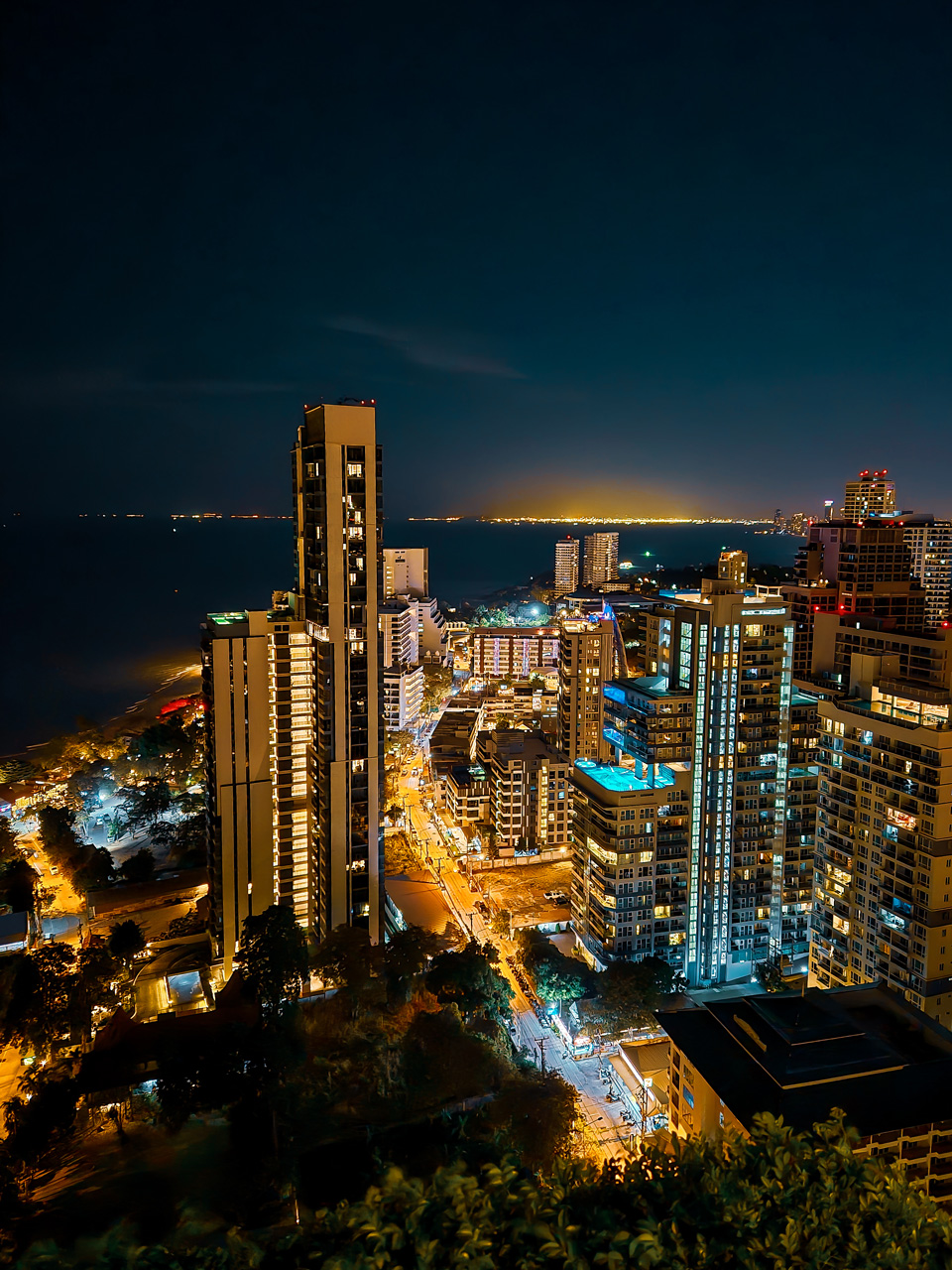
Our planet isn’t only tropical — it holds snow-covered, frozen places that are remarkable in their own right. But those who were born, raised, and live in cold climates sometimes dream of trading grey skies, snow, and short winter days for sun, warmth, the sea, palm trees, and spectacular sunsets. I spent most of my life in a northern country, and like many others, I now prefer to spend my winters in the tropics. But wintering abroad is a full life, complete with its own domestic complications — and what follows is everything I’ve learned from living through it in Thailand.
- Visa
- Choosing a format
- Money
- Mobile service
- Housing
- Getting around
- Traffic
- Food
- Health
- Budgeting for a winter in Thailand
Visa
Whenever you plan an extended stay in any country, the visa is the first thing worth settling. Many nationalities can enter Thailand visa-free, but over the past several years the government has repeatedly revised the length and terms of extension. If your plan is to stay for several months, look into the tourist e-visa — available for either 90 or 180 days, applied for directly through the consulate’s website. Officially, processing takes up to 14 days, though this varies by country of application. I’ve had mine approved in as little as three days, and once it took closer to two weeks.
The single most important piece of visa advice I can offer — for Thailand or anywhere else — is this: ignore what blogs, social media, and articles tell you. The fullest, most current information will always be on the website of the Thai embassy in your own country.
Choosing a format
Before you fly out, it’s worth deciding how — and where — you want to live. There are three formats: settle in one place for the whole winter and explore it thoroughly, move somewhere new every month and get to know the country broadly, or combine both — staying put for three or four months, then setting off to travel.
If your winter begins in Pattaya or Hua Hin, fly into Bangkok and take a comfortable bus from the airport to your destination. If you’ve chosen somewhere else, Bangkok is still worth considering as your point of entry — Thailand’s domestic flight network is excellent, and reaching any city in the country is straightforward. Phuket is the exception: it has its own major airport with direct international flights, so it’s worth flying there directly.
Money
Thailand’s banking system is well developed, but you should still carry cash US dollars, for two reasons. First, immigration officers may ask to see funds equivalent to 20,000 THB (around $600) per person. Second, cash is still king here — you can pay with it anywhere, and once you’ve settled in, you’ll get a feel for whether cash or card suits you better.
One important detail: bring only new bills. Old, worn dollar notes won’t be accepted at any exchange rate, and paying directly in dollars isn’t permitted in the country. At the airport, exchange only the minimum you need to get to your hotel — I always head to Pattaya, and $50 comfortably covers the bus and a taxi. Better rates are waiting for you in the city, where you can exchange any amount you like. In Pattaya specifically, the best rates come from the yellow T.T. Currency Exchange kiosks — easy to spot by their little hammer-shaped logo, and they’re on nearly every corner.
Mobile service
SIM cards are available right at the airport. Thailand has two major carriers: the red one — 5G (TrueMove H) and the green one, AIS (also known as One-2-Call). Both offer solid coverage, fast internet, and comparable rates. The smartest approach is to grab whatever’s cheapest at the counter for three days or a week, then download the carrier’s app and choose a plan that actually suits you — far better value than the tourist packages sold by agents or phone shops. Topping up and managing your SIM is easiest through the app, though cash top-ups are everywhere too, usually at payment kiosks near 7-Eleven.t
Housing
Plenty of chat groups now offer short- and long-term rentals, and deals can technically be arranged remotely — but I’d advise against it. There’s a real risk of scams that leave you without housing on arrival, and photos rarely match reality. The subtropical climate is unkind to everything, including interiors; a renovation from a year or two ago can look far less fresh than its photographs suggest.
The safer route is to book a hotel for 7–10 days and use that window to find something in person — especially useful if you’re wintering in one place for the season.
Finding housing for six months or longer is straightforward; shorter terms exist too, but they’re harder to come by and somewhat pricier. The ideal window to rent is from mid-October to mid-April — by October, choices are still plentiful and prices haven’t yet climbed toward high season.
You can work with either Thai or foreign agents, though it helps to understand the differences in approach. Foreign agents tend to operate honestly, since dishonesty risks jail or deportation. Thai agents are generally honest too — religion and reputation matter deeply here — but their more relaxed relationship with money can work against you, particularly when it comes to returning deposits. I ran into this myself once: my deposit came back a full week after I’d already moved out, which was unsettling. Going to the police rarely helps in these situations, since — as in most countries — the law tends to side with locals.
Thailand’s long-term rental system has its own logic: the agent effectively acts as property manager, and it’s the owner who pays their commission. In practice, this means you’ll only need to cover the first month’s rent plus a deposit. Deposits vary widely — anywhere from 5,000 THB (around $150) up to two months’ rent. Smaller deposits tend to come from foreign agents; official agencies typically ask for one month, while Thai agents more often ask for two.
Facebook Marketplace and dedicated Telegram groups are usually the best hunting grounds. You can also simply walk through a neighborhood you like and stop into local real estate offices — they’ll almost always have options for six-month stays at mid-to-high budgets. For a full year, it’s worth approaching condominiums you like directly and asking about vacancies. Management companies generally dislike short leases, and few will even offer terms as short as six months.
Worth noting: nearly every residential complex comes equipped with amenities — pools, lounge areas, gyms, saunas.
Getting around
You’ll get around Thailand by public transport, taxi, or a rented car or motorbike. Songthaews are common in major cities, but they’re not especially convenient — slow, stuck in every traffic jam, and essentially an open-air pickup bed under the tropical sun. Taxis are the better option: cool, if occasionally caught in traffic; motorbikes run hotter but faster. And taxis are cheap regardless — around 100 THB (roughly $3) will carry you across half of Pattaya in a comfortable crossover. A motorbike costs even less.
To rent a car or scooter, you’ll need an international driving permit — and, just as essential, the actual skill to handle one. Cars rarely cause trouble, but plenty of first-timers assume a motorbike will be easy, only to find themselves unable to handle the chaos of local traffic and end up in an accident. Many embassies explicitly warn against renting a motorbike without real riding experience. If your home country offers motorcycle courses, even a few lessons are worth taking before you arrive.
One more essential point: riding without a helmet isn’t just risky, it’s against Thai traffic law — regardless of how many people around you seem to skip it. A minor fall can still mean a serious head injury, and police fines for riding helmetless run to 2,000 THB (about $60) — roughly three times the cost of simply buying a new helmet.
It’s generally better to rent from Thai operators — local business incentives let them offer better prices than foreign-run rental shops, and their fleets tend to be newer. Expect a deposit of around 1,000 THB (about $30), refunded when you return the bike.
Traffic
First, driving is on the left, meaning roundabouts flow clockwise — pay extra attention early on, unless your home country already drives on the left, in which case this will feel entirely natural. Second, left turns on red are permitted at intersections (the local equivalent of a right turn on red elsewhere), so don’t queue in the far-left lane if you’re simply driving straight through. And third — traffic here is genuinely chaotic. It’s entirely normal to see someone driving against traffic, emerging suddenly from the roadside bushes, or a motorbike weaving across a pedestrian crossing. Rules are treated as more of a suggestion, and despite what any traffic authority might claim, the real governing principle on the road is: whoever is bigger has the right of way. And yet, for all that, everyone is remarkably courteous — drivers yield to one another constantly, and horns are rarely used.
Food
Tourist areas have everything, from street carts to Michelin-starred restaurants helmed by European chefs. Prices track directly with décor — the nicer the interior, the pricier the menu — though the quality of the food itself doesn’t necessarily follow suit. Everything here tends to be remarkably fresh: shrimp caught overnight and served for breakfast, mangoes picked at dawn and blended into smoothies by noon.
There’s really only one thing worth keeping in mind: buy Thai food where Thai people eat, and European food from the foreigners who make it. The logic is simple. Thai dishes served in tourist-facing restaurants are often adapted, sometimes quite far from the original — most Thais can’t afford restaurant dining and eat instead at small cafés or night markets (which open after sunset), and that’s exactly where the most authentic, delicious food tends to live. One small example: the best fried rice with shrimp I’ve ever eaten came from a place in Ayutthaya that was really just a tarp held up by six poles, four tables underneath, and a kitchen tucked in the corner — the whole dish cost a single dollar. On the flip side, European cuisine isn’t native territory for Thai cooks, but plenty of Italians, French, and Germans have opened restaurants of their own, where you can start the day with a proper French croissant or sit down to real Italian pasta or pizza for lunch.
You can also find nearly any ingredient you’d want and cook familiar dishes at home — the cost barely differs from eating at a casual café, though it won’t beat the priciest restaurants. Fruit, vegetables, and eggs are best bought at the market, where they’re fresher, more natural, and cheaper than in a supermarket. Fish is available at the market too, though you’ll need to arrive by 6 a.m., since the night’s catch disappears fast — I tend to buy mine at the supermarket instead. You’ll also find a wide range of spices, familiar and not; I experimented with the local ones myself, but after running into something blisteringly hot twice, I gave up trying.
Thai food, as a rule, runs spicy — often intensely so. Anyone accustomed to milder European cooking should expect to have their palate thoroughly scorched either way, which is why it’s worth simply asking for dishes “no spicy” when you order. Subtler requests like “just a little spicy” tend not to register — and even then, the dish is likely cooked in the same pots used for the spicy version, since the walls of a wok or pan absorb enough chili to still overwhelm a sensitive tongue.
Health
Despite Thailand’s reputation in certain corners of the internet as an unsanitary place, genuine food poisoning is rare. In two years of living there, I never once got sick. The poisoning-like symptoms tourists often report tend to trace back to heatstroke, a protein overload from too much seafood, alcohol — or, quite often, all three combined.
Most minor ailments can be handled with pharmacy medication, and Thailand carries plenty of equivalents to what you’re used to. For a small nighttime injury, a headache, or a fever, 7-Eleven stocks basic essentials and, unlike pharmacies, never closes.
If you manage a chronic condition, bring your medication with you. Thai pharmacies don’t sell NSAIDs in tablet or injectable form at all — those are only available through a hospital — though topical versions can be bought freely. Worth noting, too: no injections are sold over the counter here, not even vitamins; administering them is considered strictly a job for a trained doctor or nurse.
For anything serious — illness or injury — a hospital visit is the right call. All healthcare in Thailand is paid, with prices varying by tier, so travel insurance is worth arranging in advance. Broadly, there are three categories of hospital: the very local ones, where Thais without insurance go, offering things like X-rays or basic wound care cheaply, though staff rarely speak English and communication often happens through Google Translate. The second tier caters more to foreigners — pricier, but with English-speaking doctors and a more comfortable setting. And the third tier offers multilingual service and real comfort throughout, at a price to match. To give you a sense of scale: treating an open leg fracture can run to roughly $10,000.
Budgeting for a winter in Thailand
- Visa — $150 per person
- Flight — realistically $500–$2,000 one way per person, checked bag included
- Mobile service — around $10–15 a month per SIM
- Home internet — about $18, though many condos already include fast shared Wi-Fi at no extra cost
- Rent — anywhere from $300 to $2,000, depending on the type and quality of housing (excluding both ultra-budget and ultra-luxury extremes). A one-bedroom, business-class condo with a sea view runs $600–800 a month, plus another $60–80 for electricity and water
- A decent scooter rental, something like a Honda PCX — $150–200 a month; larger models like the Honda Forza run $350–450
- Food — $800–$1,500 a month for two, covering a comfortable mix of cafés, restaurants, and home cooking.
Leaving out the flight and the visa, a comfortable life in Thailand for two people runs somewhere between $2,000 and $3,000 a month. In my view, no country in Southeast Asia matches Thailand’s balance of cost and quality of life — and it’s a place that will genuinely suit anyone who values sensible spending without giving up comfort.


